How Free Versions Reveal Volatility Patterns in Multiplier-Driven Reel Systems
Henrik Schulz · Sep 5, 2026
How Free Versions Reveal Volatility Patterns in Multiplier-Driven Reel Systems
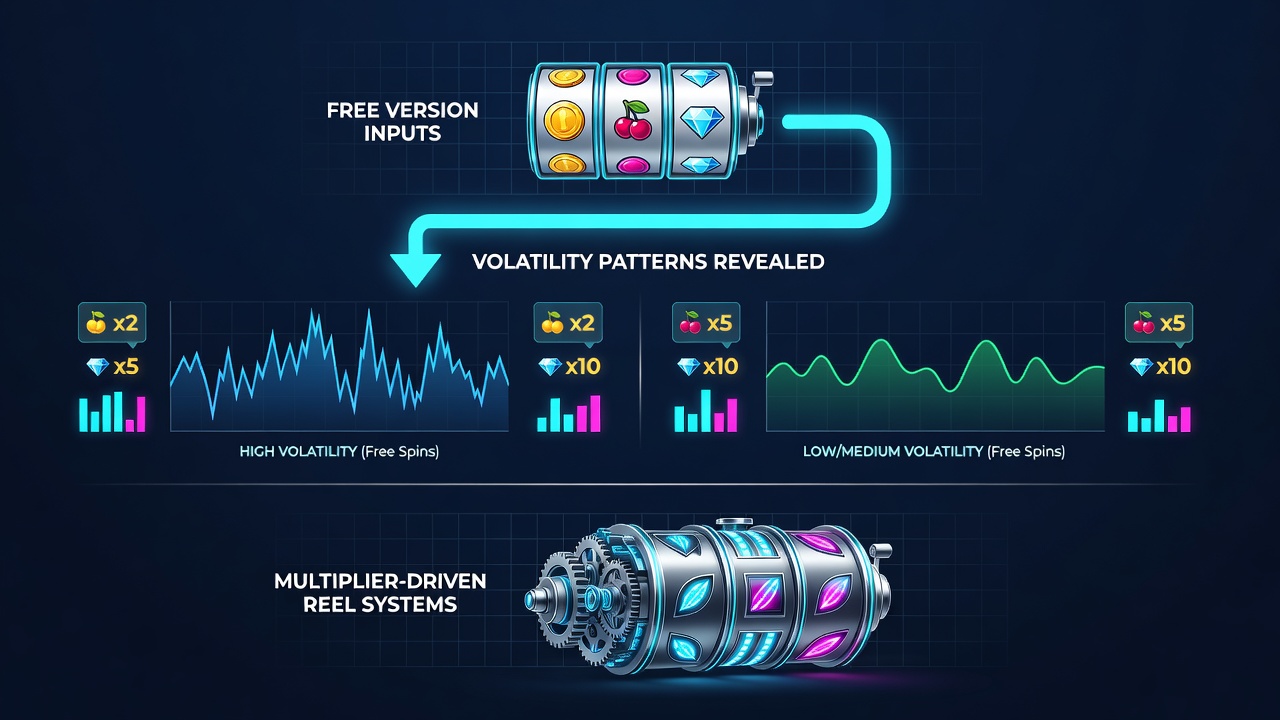
Multiplier-driven reel systems operate through layered mechanics where symbols carry values that scale base payouts, and free versions of these games provide extended access to observe how those multipliers interact with overall win distribution. Researchers have documented that demo modes allow repeated spins without financial commitment, which in turn exposes the frequency and magnitude of multiplier activations across thousands of cycles. Data from industry monitoring shows these patterns emerge most clearly when players track sequences of low, medium, and high multiplier hits over extended sessions rather than isolated plays.
Mechanics of Multiplier Integration on Reels
Reel systems incorporate multipliers either as static overlays on specific symbols or as dynamic features triggered by combinations, and each approach alters the distribution of returns in measurable ways. When a multiplier lands on a winning line it multiplies the base award by its value, yet the placement frequency determines whether the game leans toward frequent small boosts or rare large jumps. Observers note that free versions remove the pressure of real stakes, enabling systematic logging of these occurrences across different bet levels and reel configurations.
Studies from academic sources on probability modeling confirm that multiplier placement follows weighted random distributions, and repeated demo play reveals the clustering tendencies that affect short-term variance. For instance, certain titles group multipliers on adjacent reels during bonus rounds, creating observable streaks that standard play sessions rarely capture in sufficient volume. This documentation process turns demo access into a practical tool for mapping the underlying mathematics without external variables.
Using Free Play to Map Volatility Signatures
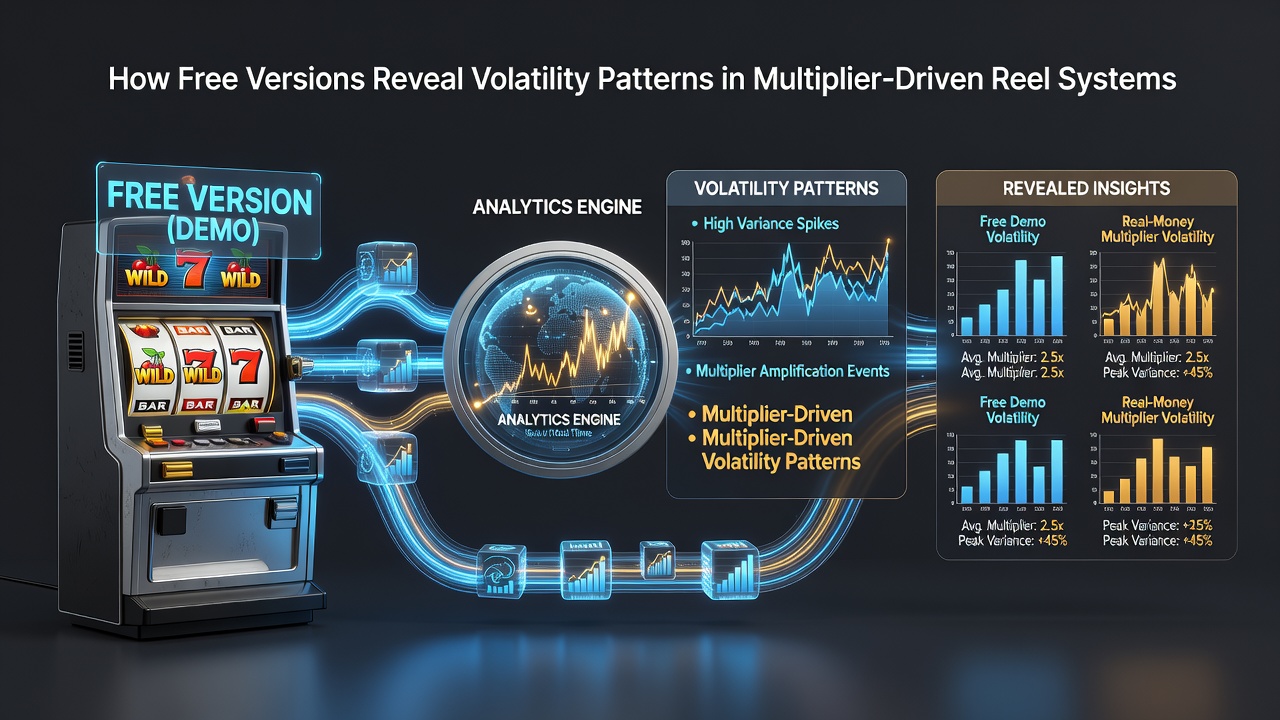
Volatility in multiplier systems arises from the combined effect of base symbol frequency and multiplier scaling, producing distinct signatures that free versions make visible through volume testing. Players who run hundreds of spins in demo mode can calculate hit rates for each multiplier tier, then compare those rates against published return-to-player percentages from regulatory filings. Figures released by the Nevada Gaming Control Board indicate that games with clustered multipliers show higher variance in demo logs collected over equivalent spin counts.
One study revealed that extended demo sessions highlight dry spells between high-multiplier events more reliably than paid play, because participants continue spinning without interruption. The reality is that these patterns become statistically significant only after several thousand rotations, a threshold easily reached in free environments but costly in real-money settings. What's interesting is how the same reel engine produces measurable differences in outcome spread when multipliers activate on consecutive spins versus isolated ones.
Comparative Analysis Across Game Titles
Different developers apply multipliers through unique weighting tables, and free versions allow side-by-side comparison of those implementations without financial exposure. Australian research institutions have published reports showing that titles with progressive multipliers during free spins exhibit tighter clustering of mid-range wins compared with fixed multiplier designs. Demo play captures these distinctions because users can reset and repeat identical sequences under controlled conditions.
Industry reports from the European Gaming and Betting Association further detail how certain reel layouts concentrate multipliers toward the center positions, increasing the likelihood of partial activations that contribute to moderate volatility. Observers tracking these layouts in free modes record the exact spin intervals between qualifying events, creating datasets that mirror real-play distributions. As of September 2026, updated tracking tools integrated into some demo platforms have automated this logging, allowing faster identification of outlier patterns across multiple titles.
Practical Observation Techniques in Demo Environments
Effective pattern recognition requires structured tracking rather than casual spinning, and free versions support this by preserving session history and enabling export of results for later review. Those who've studied these systems recommend logging every multiplier value alongside its position and the resulting payout multiplier, then calculating running averages over blocks of 500 spins. This method isolates the contribution of each multiplier tier to overall volatility without the confounding factor of changing bet sizes.
Turns out the most revealing data emerges when demo sessions simulate both minimum and maximum bet configurations, because some engines adjust multiplier probabilities based on stake level. Government sources in Canada have noted similar adjustments in licensed products, confirming that free play at varied stakes reproduces the same conditional probabilities found in paid environments. The ball's in the researcher's court to accumulate enough cycles for confidence intervals to stabilize around observed frequencies.
Conclusion
Free versions function as controlled laboratories for examining volatility patterns within multiplier-driven reel systems by removing cost barriers and permitting high-volume repetition. Data collected through these modes aligns with regulatory statistics and academic models, providing transparent views of multiplier activation rates and their effects on return distribution. Continued refinement of demo analytics tools promises even clearer mapping of these interactions as platforms evolve through 2026 and beyond.