Uncovering Multiplier Chain Reactions Across Expanding Reel Configurations in Trial Play Sessions
Rosa Vogel · Oct 17, 2026

Uncovering Multiplier Chain Reactions Across Expanding Reel Configurations in Trial Play Sessions
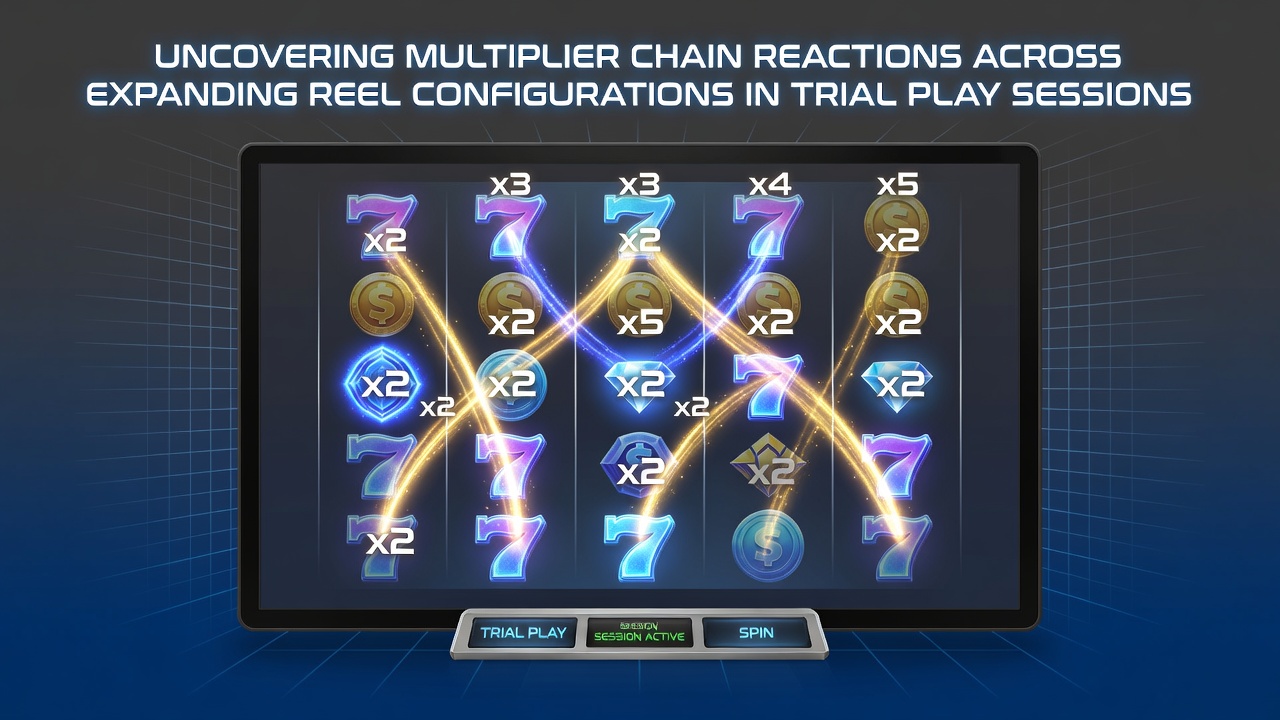
Slot mechanics continue to evolve with expanding reel systems that adjust grid size mid-spin and trigger layered multipliers, while trial play sessions allow detailed observation of these interactions without financial stakes involved. Researchers track how initial multipliers activate adjacent positions and extend across newly added reels as the configuration grows, creating sequences where each reaction feeds the next. Data collected from repeated demo rounds shows these chains often begin with a base multiplier on a central symbol and propagate outward when expansion occurs, leading to cumulative values that appear in the payout summary at spin end.
Mechanics Behind Expanding Configurations
Expanding reels operate through algorithms that increase row or column counts based on specific symbol landings, and this growth opens pathways for multipliers to interact across larger areas. Observers note that a single expanding event can reposition existing multipliers while introducing new ones on fresh reel segments, which then participate in the same chain sequence. Studies of these systems reveal that chain length depends on both the initial symbol placement and the timing of expansion triggers, with longer chains emerging when multiple expansion steps occur within one spin cycle. Trial environments make it possible to isolate these variables and record exact sequences step by step.
Multiplier Interactions in Practice
Multipliers in these setups function as additive or multiplicative factors that combine when symbols align during an active chain, and observers have documented cases where one chain reaction doubles or triples subsequent values as the grid widens. Data indicates that certain reel positions serve as focal points where multiple chains converge, producing higher final totals than isolated activations would suggest. In trial sessions spanning thousands of spins, patterns emerge showing that chain reactions occur more frequently when expansion starts from the middle reels rather than the edges, because central growth allows multipliers to reach more symbols before the spin concludes.
Observations from Extended Trial Sessions
Analysts conducting prolonged demo runs have logged thousands of individual chain events to map frequency and distribution across different game titles. These records demonstrate that multiplier chains rarely exceed four sequential steps in standard configurations, yet they can reach six or more when expansion events stack consecutively. Figures released in October 2026 from international gaming bodies indicated steady growth in titles featuring these mechanics, with trial data serving as the primary source for identifying consistent chain behaviors. One study revealed that players reviewing session logs often spot repeating trigger conditions, such as specific symbol combinations that reliably initiate expansion followed by multiplier propagation.
According to research compiled by the American Gaming Association, expanding reel formats account for an increasing share of new releases, and trial play remains the main method for documenting how multipliers respond to each expansion phase. The same reports note that chain reaction data gathered in controlled demo environments aligns closely with live session statistics once sufficient sample sizes are reached. Researchers continue to refine tracking tools that capture every multiplier addition and removal during a single spin, allowing precise reconstruction of entire reaction sequences.
Pattern Recognition Across Multiple Titles
Comparative analysis of several games shows that while core expansion rules differ, the underlying multiplier chain logic follows similar progression rules once the grid begins to grow. Trial sessions across these titles reveal that certain symbol types act as catalysts, increasing the likelihood of chain continuation by one or two additional steps. Data from aggregated demo results further indicates that payout distribution widens when chain reactions exceed average length, because the combined multipliers apply to more winning lines created by the expanded layout. Observers tracking these outcomes over months have built datasets that highlight seasonal variations in chain frequency, potentially linked to software updates that adjust expansion probabilities.
Conclusion
Trial play sessions provide the clearest window into multiplier chain reactions within expanding reel configurations because they permit unlimited repetition and detailed logging. The patterns identified through such sessions include predictable trigger points, average chain lengths, and the impact of grid growth on final multiplier totals. Reports from sources such as the Australian Gambling Research Centre confirm that these mechanics continue to appear in new releases, with trial data remaining essential for understanding their operational behavior. Continued collection of demo session records supports ongoing refinement of models that describe how multipliers interact across expanding grids.